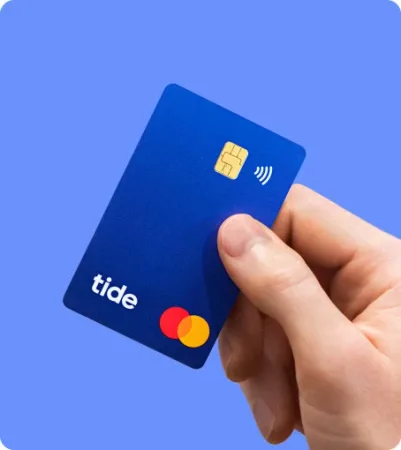
Tide business account: my guide to costs and everyday use
I use Tide as a business owner. Here are the account fees, payment needs and bookkeeping checks I would consider alongside my £100 referral offer.

I run Draper Digital and use Tide. When I look at a business account, I want the everyday payments, fees and bookkeeping to work together. This guide sets out the costs and practical questions I would check before choosing a plan or moving business payments.
- My referral code
GG6RBP- Your benefit
- Use my Tide referral code GG6RBP for £100 after £500 of qualifying card spending within 90 days, subject to new-customer eligibility and approval.
Eligibility, conditions and what I receive
To qualify: New Tide applicants with no prior account, subject to approval. Enter GG6RBP during signup or within seven days, within the promotion period.
Conditions: Complete the qualifying card spending within 90 days of account opening. Excluded transactions do not count. Account fees may apply; rewards can take up to eight weeks after validation.
My reward: I may receive a separate referral reward, depending on my Tide subscription tier. Your eligible new-customer reward is £100.
Check the provider’s current terms before applying.

Describe a normal month before comparing plans
List the payments you expect to make and receive, using an ordinary month and a busier one. Separate domestic transfers, cash handling, card spending and overseas payments. A business with a handful of client invoices has a different pattern from one paying many suppliers.
Add the operational features that matter: additional people who need access, payment approvals, statement exports and your bookkeeping process. Mark each as essential, useful or unnecessary. This stops a long feature list distracting from the few tasks the account must do reliably.
- Number and type of incoming and outgoing payments.
- Currencies and countries involved.
- People who need access and the actions each should perform.
- Records and exports needed for bookkeeping.
- Any requirement that would rule an account out.
Read the allowance as well as the monthly price
I checked Tide’s pricing page on 21 September 2026. Its Free plan has no monthly plan fee and includes five bank transfers a month. I would still check which transfers count, the charge after that allowance and any fees for the other ways the business uses the account. No monthly plan fee does not mean every activity is free.
For each plan, make a small cost sheet with the subscription, included activity, chargeable activity and optional extras. If a displayed paid-plan price depends on annual billing, retain both the annual commitment and its monthly equivalent. Do not compare a discounted annual figure with a genuinely monthly contract without recording the difference.
I would put two realistic activity levels into the worksheet below before choosing a plan. A low subscription price is only one part of the monthly total.
Copy my normal-month and busy-month cost worksheet
I would copy these lines into a note or spreadsheet and fill them in twice: once for an ordinary month and once for a busier month. Use the current tariff for the exact account and billing option you are considering.
- Plan name and billing choice: ___. Date I checked the tariff: ___.
- Plan fee, including any applicable VAT: normal month £___; busy month £___. For annual billing, also record the total commitment £___.
- Transfers that count towards the allowance: normal month ___; busy month ___. Included transfers: ___. Charge for each extra transfer: £___.
- Transfer charges: normal month £___; busy month £___. Subtract the allowance first, with zero as the minimum number of chargeable transfers.
- Other activity fees, such as cash, cheques or overseas payments: normal month £___; busy month £___. Record the specific fee and transaction type.
- Optional tools or additional cards I actually need: normal month £___; busy month £___.
- Total expected running cost: normal month £___; busy month £___. Keep a one-off signup reward on a separate line.
Here is a fictional example to show the arithmetic. These are made-up plan prices, not Tide’s tariff: Plan A costs £0 a month, includes five transfers and charges 30p for each additional transfer. Plan B costs £10 a month and includes all the transfers in this example. Assume no other fees or tax differences.
- At 10 chargeable-type transfers: Plan A costs (10 − 5) × £0.30 = £1.50. Plan B costs £10.
- At 25 chargeable-type transfers: Plan A costs (25 − 5) × £0.30 = £6. Plan B still costs £10.
I would then add any other required fees and consider whether the features justify the difference. A referral reward can be useful, but it does not tell me which plan will fit the business after that one-off benefit.
Understand who provides the account
Tide states that its business current accounts are provided by ClearBank. Eligible deposits are protected by the FSCS up to the applicable £120,000 limit, shared across eligible deposits held with ClearBank rather than separately for each brand or account. Check the actual account documentation and eligibility; Tide itself is not a bank.
Keep the product name and legal provider in your comparison record. Do not assume that every business-money app, an older account variant or an additional product has the same protection. If you already hold money with the same legal bank through another brand, check how the combined limit applies.
Check the awkward cases before you move payments
Try to answer the questions that would matter when something goes wrong: how you contact support, what happens to a payment that needs investigation, and which permissions another person can receive. Read the documentation for the exact account and plan rather than assuming a feature appears on every tier.
For an overseas client, establish the available receiving route, supported currency and complete charges before sharing payment instructions. For bookkeeping, confirm the export or integration you actually need. If an essential workflow is unclear, resolve it before relying on the new account.
- Can the account receive the kinds of payments your clients send?
- Are the required export formats and access roles available on this plan?
- What support route is available for your likely issue?
- What will happen to invoices, recurring payments and records during any change?
Check eligibility and the exact offer separately
Use Tide’s current eligibility criteria for your business structure, location and activity. Opening an account remains subject to the provider’s checks; a referral link is not approval of an application.
If an introductory offer is available, keep its terms alongside the account comparison. Record the required application route, qualifying steps, deadlines, exclusions and the nature of the benefit. Check whether an existing account or a previous application affects eligibility. Only count a reward after the relevant conditions have been met and it has actually been received.
An offer advertised elsewhere may belong to a different programme. Use the conditions attached to the actual application route rather than combining a code from one page with a reward described on another.
Tide referral code GG6RBP and the £100 conditions →
Tide promo code: no extra code needed for my referral offer →
Leave with a clear decision, not just a signup link
Your comparison should explain the expected running cost, the features you need and any unresolved question. Keep your current arrangement in the comparison too: opening another account is useful only if it solves a real problem or meets a requirement.
Before moving regular activity, check the new details against the provider’s instructions and make a plan for outstanding invoices, recurring payments and records. Keep the evidence for any offer separate from the everyday account setup so neither is forgotten.
Use my Tide referral code GG6RBP for £100 after £500 of qualifying card spending within 90 days, subject to new-customer eligibility and approval.
- My referral code
GG6RBP- Your benefit
- Use my Tide referral code GG6RBP for £100 after £500 of qualifying card spending within 90 days, subject to new-customer eligibility and approval.
Eligibility, conditions and what I receive
To qualify: New Tide applicants with no prior account, subject to approval. Enter GG6RBP during signup or within seven days, within the promotion period.
Conditions: Complete the qualifying card spending within 90 days of account opening. Excluded transactions do not count. Account fees may apply; rewards can take up to eight weeks after validation.
My reward: I may receive a separate referral reward, depending on my Tide subscription tier. Your eligible new-customer reward is £100.
Check the provider’s current terms before applying.
Sources & checks
- Tide: plans and pricing ↗Checked 21 September 2026
- Tide: business current account ↗Checked 21 September 2026
- Tide: referral programme terms ↗Checked 21 September 2026
Written with AI assistance and editorial review. How I write these guides.